Double de la clef de la chambre de Cécile
Les liaisons dangereusesThe Double de la clef de la chambre de Cécile is a duplicate key that Vicomte de Valmont proposes to facilitate Cécile Volanges’s secret communication with Chevalier Danceny. Its decisive significance lies in the gap between its stated purpose and its use: introduced as a convenience for letters, it becomes the means of Valmont’s nighttime entry into Cécile’s room. The key makes secrecy material, but it also gives Valmont leverage and leaves Cécile exposed to blame.
An object designed to bypass supervision
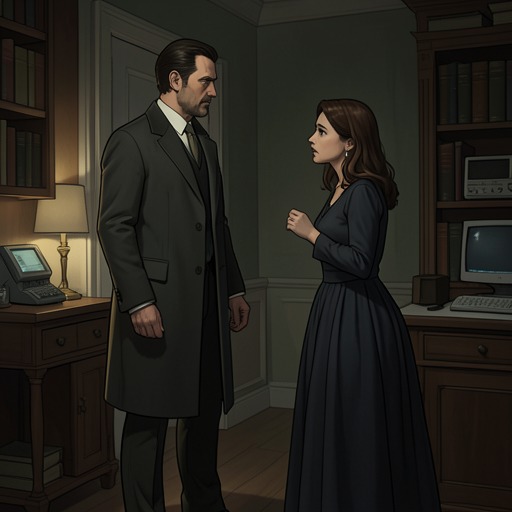
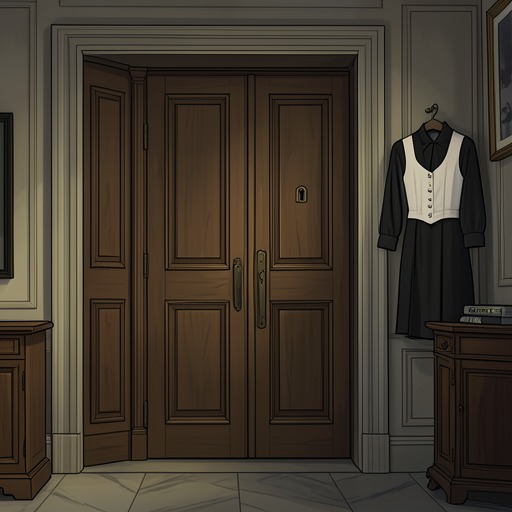
Cécile’s room has a door opening onto a corridor, but Madame de Volanges has taken the key. That detail establishes the practical obstacle the duplicate is meant to overcome: letters between Cécile and Danceny are being carried by Valmont, and more direct contact is difficult under her mother’s supervision. The proposal is not simply to possess another key; it is to make private communication less dependent on an intermediary and less vulnerable to interruption.
The copy is supposed to resemble the original closely enough to take its place, but Cécile worries that the difference between them may be noticed. Her concern is specific: Madame de Volanges is observant, and discovery could have lasting consequences for her. She also considers the making of a duplicate itself morally serious, even though Valmont offers to take responsibility for doing it. The object therefore appears from the outset in two registers—as a practical solution and as evidence of a breach that could be attributed to Cécile.
Refusal, persuasion, and transfer
In her first response to Valmont’s proposal, Cécile says she has tried twice to take the key and could not bring herself to do so. She chooses to remain with the existing arrangement, accepting the inconvenience of waiting for Valmont to deliver letters rather than risking discovery. Her hesitation is not a casual delay: she describes fear, trembling, and the possibility of being permanently compromised if the arrangement is found out.
Valmont’s later account describes how he turned this refusal into eventual agreement. He says he made the return of a letter difficult, then presented the key as the remedy. When Cécile still resisted, he wrote to Danceny, whose wish for the arrangement added pressure. In Valmont’s account, the young woman’s consent becomes something obtained through a chain of persuasion rather than an independent decision. The key’s apparent transfer consequently carries more weight than a simple exchange of household objects: it records the success of Valmont’s manipulation of the lovers’ trust.
Cécile’s subsequent letter confirms that she has given way, while retaining signs of anxiety. She asks Valmont to return the key he gave her for replacing the other, and proposes a quick exchange: she will give him the other key at breakfast the following day, hoping to reduce the time in which her mother might notice. She also asks him to use the key to collect her letters so that Danceny can hear from her more often. The arrangement is now accepted as a practical convenience, but her insistence on speed shows that the danger she feared has not disappeared.
From correspondence to unauthorized access
Valmont’s account reveals a use of the key beyond the purpose Cécile describes. He presents it as the crucial means by which he could enter her room at night, after the household had become quiet. Cécile’s later account confirms the essential sequence from her perspective: she had not expected him to come into her room, was frightened when he woke her, and understood the key as having enabled his entry. She had agreed to the device in the context of correspondence with Danceny, not with an expectation that Valmont would use it in this way.
The difference between the accounts matters. Valmont narrates the key as a prize and emphasizes the skill with which he secured it; Cécile describes an arrangement she was reluctant to accept and the fear that followed its use. His account also makes plain that Danceny’s confidence in him helped him obtain what he wanted. For Cécile, that same confidence becomes a trap: because the key could appear to demonstrate her cooperation, Valmont warns that she could be held responsible if his presence were discovered. The object therefore enables access while furnishing a pretext for shifting blame onto the person whose room has been entered.
Significance within the correspondence
The duplicate key links the novel’s letter-based intrigues to physical space. Before it is introduced, Valmont controls the delivery of messages between Cécile and Danceny; after it is accepted, he can present himself as making their communication easier while expanding his own power over the situation. A tool ostensibly meant to reduce the lovers’ dependence on him instead deepens that dependence, since Cécile’s access to Danceny’s letters and the safety of the arrangement remain in Valmont’s hands.
The key also gives material form to the difference between appearing to consent and having a free choice. Cécile’s fear of discovery, her reliance on Valmont’s assurances, and the pressure routed through Danceny all condition her decision. Its significance is therefore not that a duplicate is inherently sinister, but that control of a small household object can determine who may enter, who may communicate, and who will bear the consequences if secrecy fails. In this episode, the key opens a door while closing off Cécile’s ability to control what the arrangement means.